
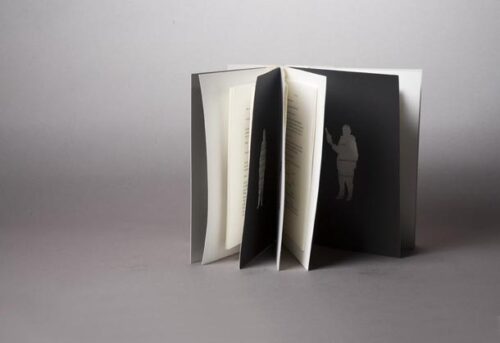
“The Nobel Museum Bookbinding Exhibition is a collaboration between SBI (Swedish Bookbinders Guild) and the Nobel Museum. From its inception in 2005, when Harold Pinter was awarded the Nobel Prize in 2005, this collaboration has resulted in a bookbinding exhibition. The goal has been and continues to be to give bookbinders an opportunity to work together on a current event. What could be better than the Nobel Prize for Literature?
This site provides news and information about the exhibition and you can also view the extensive collection of photographs from previous exhibitions. Most of the bindings are for sale, for more details please send an email to sbi@grafiska.se. The site also serves as an information channel for participants in the current exhibition project. Please feel free to contact us if you have any suggestions or comments.
2005 – Harold Pinter
For me, this exhibition calls to mind nestled Chinese boxes.
It is like an exciting voyage of discovery, where others’ impressions and ideas serve as the map that will guide me to the beginning of a new experience. Right at the centre is the kernel – the text that the 2005 Nobel Laureate in Literature, Harold Pinter, once wrote. How he wrote his text, I do not know. By hand? On a typewriter? A computer? What did the paper look like? White? Lined? Tinted?
Once completed, the publishing house’s designer selected a font, size, paper quality and so on. Did he do so in consultation with Pinter? Presumably.
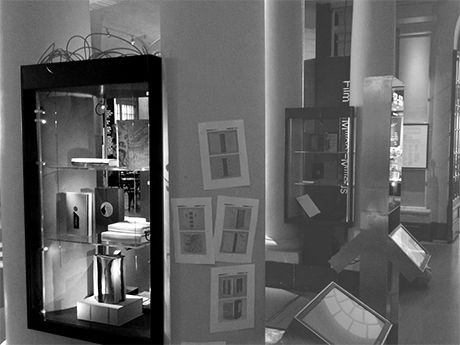
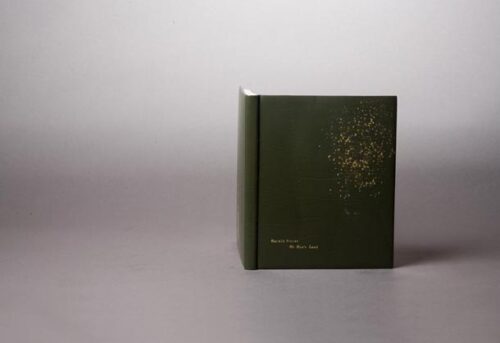
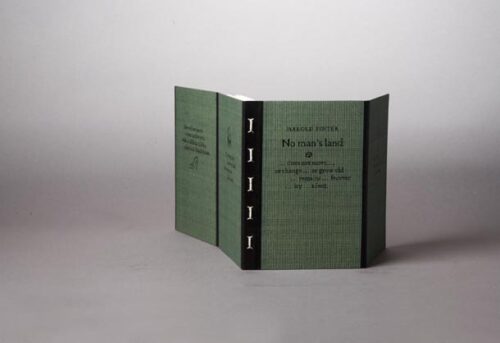
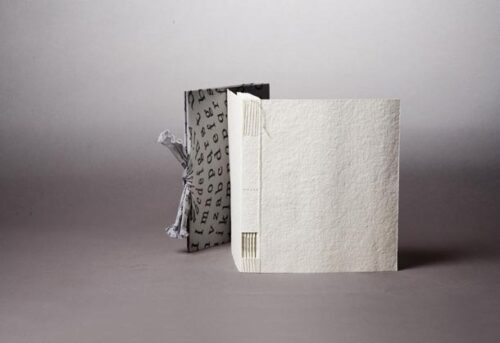
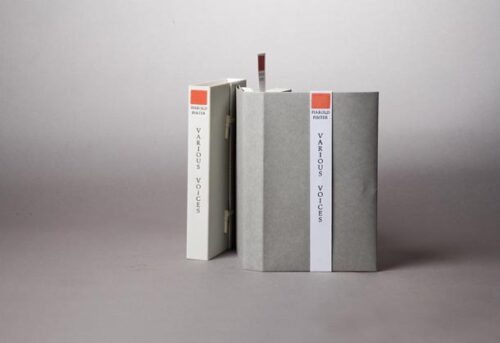
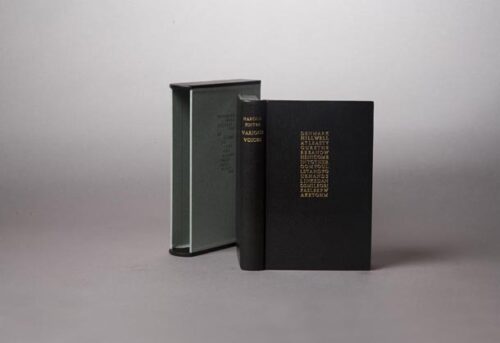
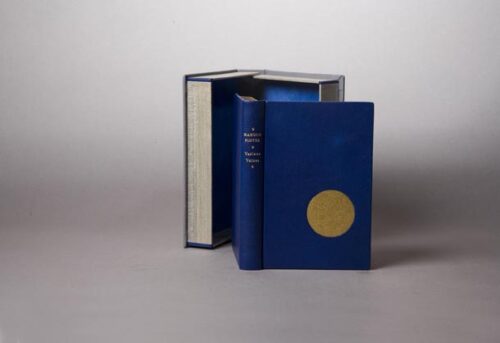
Even at this early stage, Pinter’s original text has been placed inside a new Chinese box. Sweden’s premier bookbinders have been given free reign to create yet another box in which to place Pinter’s book, or, more accurately, a number of very different boxes. Some have chose to add an additional, literal box around the first, while others have taken completely different roads. In turn, we at the Nobel Museum have chosen to position and assemble the books in our own way, and to allow them to be enclosed inside our display cases, which have been placed in a very deliberately designed museum, and our museum, in turn, is contained in…well, we could go on and on indefinitely. I think you understand my point.
Is a book exhibition really possible? Is it meaningful if its visitors have not read the books? The form, the expression, the binding is an artistic product based on the text Pinter has given us. The notion that a bookbinder’s interpretation may take any number of different paths and inspire us to read the book itself is as natural as the idea that a beautifully painted landscape can inspire us to journey to and explore the place it depicts. So examine, enjoy, and let yourselves be inspired to read Pinter, or, perhaps preferably, to visit the theatre and watch his plays being performed. In doing so, you will help this exhibition take on yet another dimension. Then, the kernel will have been drawn from the concealment of its boxes.
Olov Amelin,
Exhibit Coordinator, Nobel Museum
Last year – 2005 – the same year that Harold Pinter was announced as the Nobel Laureate in Literature, was also the 375th anniversary of the Sweden’s master bookbinders’ association, Bokbindarmästareföreningen. Presumably, this makes the association one of the world’s oldest crafts associations. Obviously, over the course of its long history, circumstances have changed for Swedish book-making. In two respects, the working conditions of historical and contemporary bookbinders differ widely. Today, it is relatively rare that a bookbinder has the opportunity to bind newly-printed material. Conversely, this was the norm for their predecessors. When it comes to the binding’s decoration, historically, binders were bound by tradition and convention. Today, manual bookbinders are free to choose their own material and style of expression for each book to be bound.
From Bokbindarmästarföreningen’s perspective, we are happy to say that our collaboration with the Nobel Museum has given 23 bookbinders the opportunity to bind what amounts to highly topical literary material – that written by the Nobel Laureate in Literature.
Twenty-three bookbinders, 23 creations. Such is the nature of our time.
Per-Anders Hübner,
Board Member, Bokbindarmästarföreningen and Project Manager
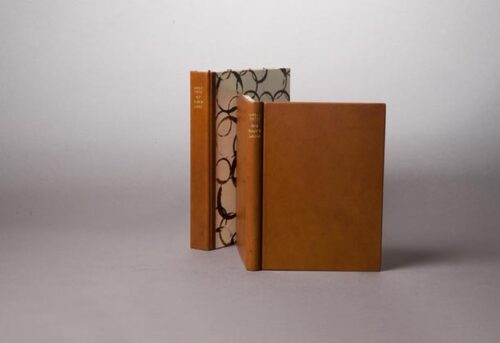
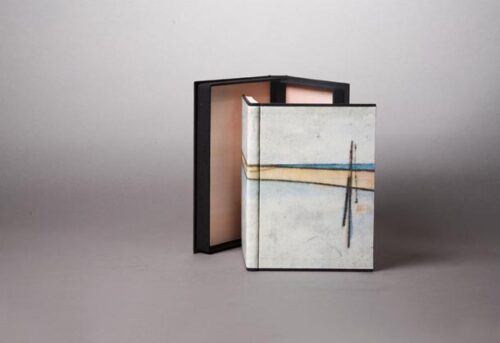
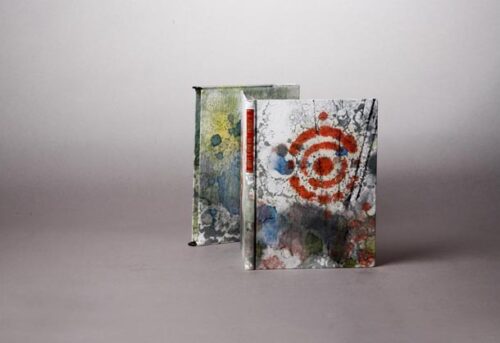
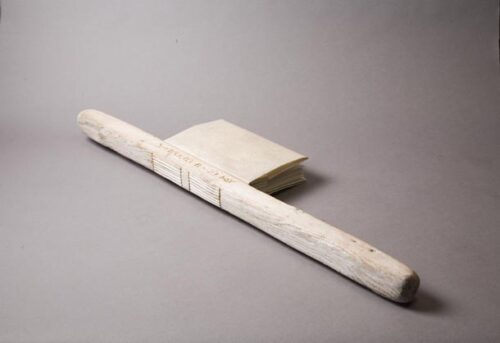
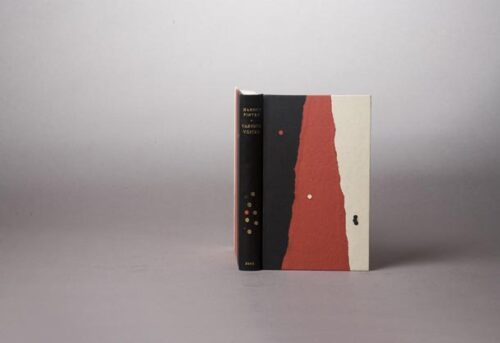
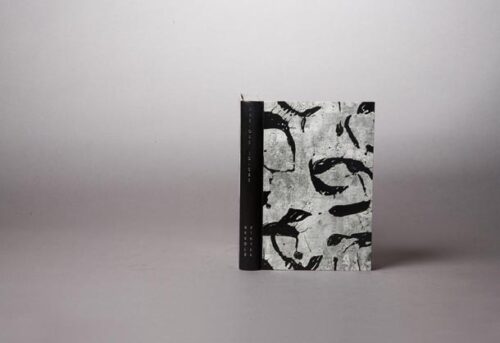
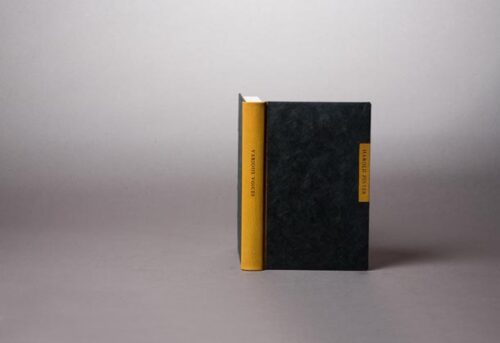
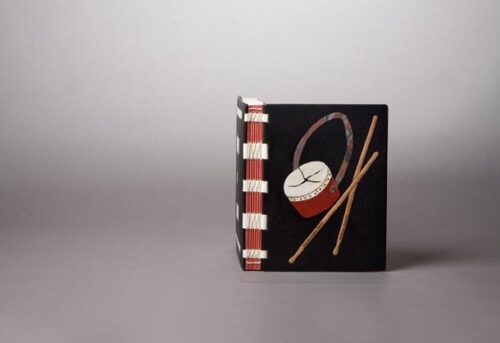
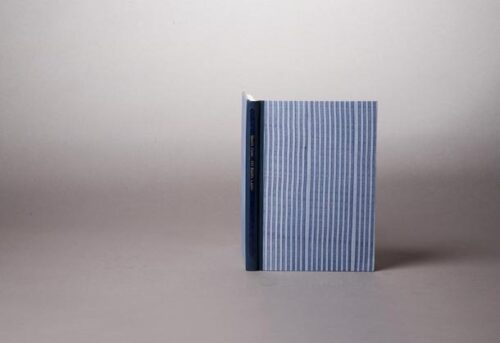
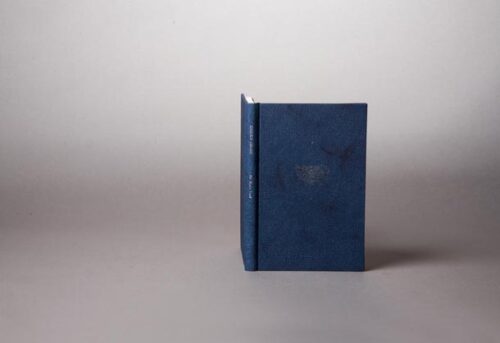
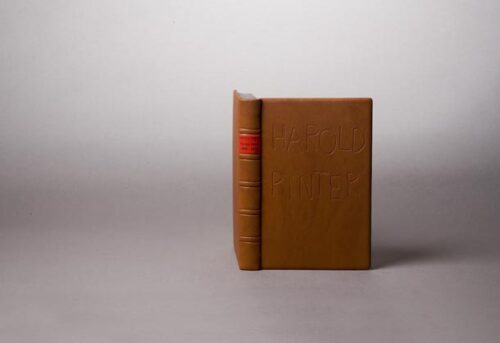
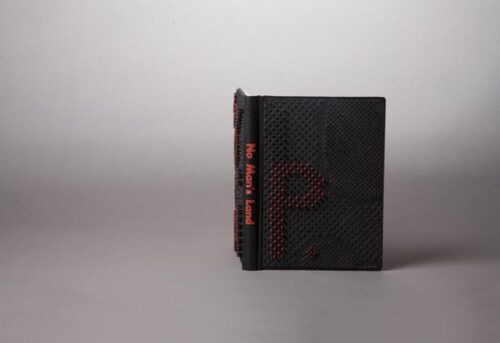
2006 – Orhan Pamuk
Gorderland Art. We are standing on the street outside the Nobel Museum awaiting the Laureate’s imminent arrival. Naturally, we are all somewhat nervous as we prepare to meet him. Just then, the phone rings and we learn that he has been delayed. We pace up and down and peer somewhat apprehensively towards Slottsbacken. Will he make it in time? And it is, as on many previous occasions, a man we await: Orhan Pamuk.
A long queue has already formed in Stortorget Square; expectant book-lovers waiting to have their editions signed. Our aim is to have 40 other books signed before the grand signing takes place. At last, Pamuk arrives. Smiling, he steps out of the limousine together with his daughter. We walk quickly into the museum and up to the Museum Director’s office. Pamuk sits down at a desk and we quickly organise the most efficient book-signing ever to be undertaken: one person opens the books, another hands them to Pamuk for signing and a third takes care of the newly signed editions.
A cup of tea is made for the Nobel Laureate, who has been assigned star-status for the duration of his short stay in Stockholm. He is friendly, but somewhat stressed by all the attention. Pamuk is no great conversationalist; his preferred form of expression is the written word.
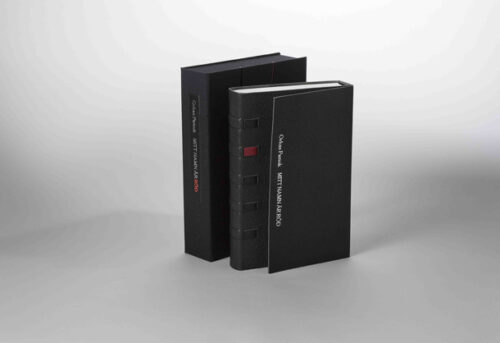
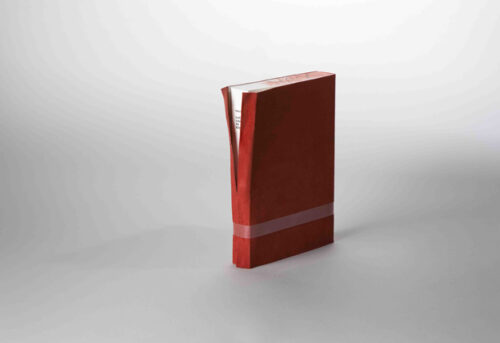
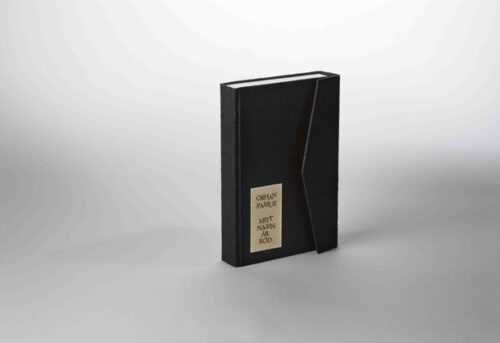
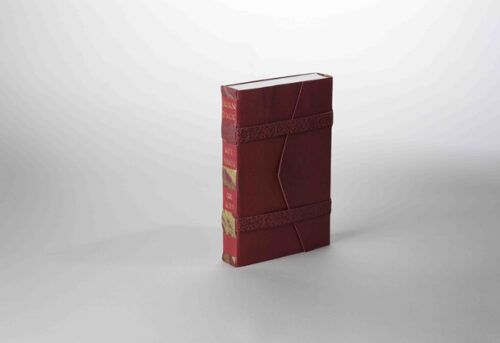
We have chosen the book entitled My Name is Red, a story characterised by murder and passion and set in the Ottoman Empire at the close of the 16th century. The main character is a miniaturist who serves at the court of Sultan Murad III in Istanbul and who works with books. At the secret behest of the Sultan, this miniaturist attempts to flaunt artistic boundaries and challenge prevailing religious conventions. Ultimately, his audacity costs him his life.
This is a story that could just as easily be about the Literature Laureate himself. Pamuk has tested the boundaries in his homeland of Turkey and, in doing so, has aroused the ire of some and the admiration of many. His point of departure, both geographically and intellectually, is the melting pot that is the city of Istanbul. East meets West, Islam meets Christianity. Pamuk “”…has discovered new symbols for the clash and interlacing of cultures,”” as the explanation of his selection as Nobel Laureate reads.
Sweden’s bookbinders have been issued a challenge. Now, their artistic portrayal of the physical boundaries of the paper used to print the story will capture the tale about the limitations of the bookmaking art found in the book. It’s a challenge of such enormous proportions that I would scarcely dare to attempt it myself.
Olov Amelin,
Exhibit Coordinator, Nobel Museum
During the Renaissance, book production in Western Europe exploded. Gutenberg had invented a printing press with moveable type and suddenly, the age of copying by hand and small printing runs was relegated to history. Among the countries quick to adopt this new technique was Italy. Publishers and bookmakers like Aldus Manutius did a roaring trade.
The increased production of printed material placed new demands on bookbinders, and not only with regard to technique and function. The bound volume’s aesthetic qualities also came under the spotlight. The heavy, blind-stamped volumes of the Mediaeval and Gothic styles were replaced by brilliant gilding and intricate leatherwork. From where did these innovations come?
The answer lies in the close contacts between Western Europe and Constantinople. The importation to the West of craftsmen such as gilders, illuminators and miniaturists became increasingly common. These craftsmen brought with them techniques and materials developed by Eastern manual bookbinders for centuries. The 16th century was also the zenith of Ottoman bookbinding.
For these reasons, it is especially exciting to be able to bind inserts that touch on this subject. All 16 bookbinder’s participating in this exhibition have bound copies of Orhan Pamuk’s My Name is Red. Within the framework of an historical detective story, the book’s characters live their lives amidst the everyday work of the miniature painting and book production. Pamuk’s work is also said to be a book about ideas.
Fittingly, ideas are also reflected in the different ways that the 16 binders have chosen to produce their respective volumes. The basic material for each binder was the same: the newly-printed publisher’s binding that Norstedts quickly produced as soon as it was announced that Orhan Pamuk was awarded the 2006 Nobel Prize in Literature. As such, these binders have worked to re-bind a book block with an already-cut spine. Though this is not always an ideal situation for a bookbinder, such circumstances also give rise to creativity and ingenuity. Each of the 16 binders has chosen their own way of tackling the problem.
The volumes’ form, colours and expressions are left to be judged by their viewers.
Per-Anders Hübner,
Bokbindarmästareföreningen
2007 – Doris Lessing
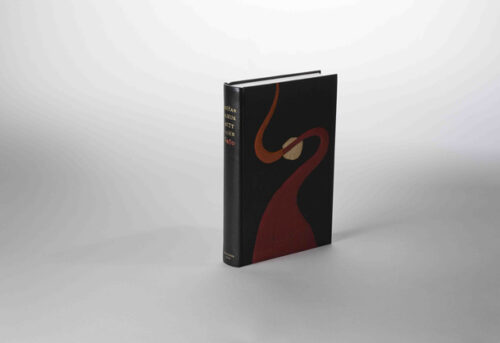
Doris Lessing, 2007 Parts of a whole. Doris Lessing’s novel The Fifth Truth plays the central role in this exhibition. Its selection from among her extensive catalogue of works seemed natural somehow. In The Fifth Truth, Lessing paints a picture of the fragmented and multifaceted individual whom every person bears within them. The book’s form – that is, allowing the book’s protagonist, Anna Wulf, to write down her thoughts about her profession, love, politics and everyday life in different notebooks – was bold and innovative at the time of the novel’s publication in 1962.
The notebooks have different colours and the novel’s literary expressions also differ depending on which notebook we read from. Each of the different subjects comes together in a fifth, gold-coloured notebook, through which Lessing shows that each element of a person’s chaotic life nonetheless forms part of a whole. “”We are, after all, living in the middle of a whirlwind,”” wrote Lessing herself in a comment on her work.
I would like to view this exhibition in the same light. Sweden’s foremost bookbinders have created a medium through which to portray Lessing’s literary works. And this, in itself, has given rise to a wide array of very different interpretations. An observer may be surprised that one novel can be clothed in so many different guises. Even though the spectrum of artistic expression is so broad, these different volumes still form part of a whole. This whole constitutes both the bookbinders’ and the Nobel Museum’s joint celebration of Doris Lessing, the 2007 Nobel Laureate in Literature.
And if this exhibition can provide not only an enjoyable museum experience, but also inspire the reading – or re-reading – of Doris Lessing’s magnificent novel, so much better.
Marika Hedin,
Head of Public Engagement, Nobel Museum
Once is as good as never and twice is a repetition, so they say. Three times is the start of a tradition. And that’s where we find ourselves today: for the third time, Swedish bookbinders have bound a work by the current Nobel Laureate in Literature. Once again, the task has proven an inspirational challenge for the participating artisans. It is always exciting to see how each binder has chosen to portray the same book.
Our aim prior to each exhibition has been to obtain unbound copies of the book. The folded, printed sheets should be uncut along the spine. This gives the artisan more freedom, but also provides an opportunity to use traditional binding methods that date back more than fifteen hundred years. The tension between past and present becomes obvious in many cases. And we have seen several examples of this in previous exhibitions.
We have also strived to have the book signed by its author. We did not succeed in doing so for the first exhibition – Harold Pinter’s illness prevented this. Unfortunately, history seemed destined to repeat itself this year, but Doris Lessing was kind enough to sign the unbound copy in London. This allows us to present unique, numbered and signed bindings.
For many bookbinders – perhaps even most – the book’s content provides ideas and inspiration for the design and creation of the binding. In the case of Doris Lessing’s The Fifth Truth, a binder receives inspiration from simply reading the table of contents. The text of the book is divided among colour-coded notebooks; four colours plus gold. The success of each binder and the fruits of their labour are left to the observer to judge.
Per-Anders Hübner,
Bokbindarmästareföreningen
2008 – Jean Marie Gustave Le Clézio
The first book was born when sheets of paper or papyrus were fastened together between two covers. Books were originally exclusive objects, written and illustrated with precision and bound with great craftsmanship and skill. Though the passage of time and the development of printing techniques has seen the book become commonplace, the art of binding books between beautiful covers remains unique. From the printed manuscript, the skilled bookbinder creates his or her own, unique interpretation of the literary text.
The magical thing about books is that each one has its own, individual characteristics. The content between its covers can evoke strong feelings, inspire new thoughts and create lively debate. As an object, a book offers a sense of security and comfort. Holding a book in your hand and feeling its weight, running your fingertips over its pages, inhaling the scent of its paper – this in itself can be just as overwhelming an experience as reading it. All of these aspects combined make a book much more than just the sum of its parts.
The Noble Prize winner in literature for 2008, Jean Marie Gustave Le Clézio, has shared with us what he missed most of all as a child during the years that followed WWII: pens, paper for drawing and writing, and his own books to read. The lack of books of his own led him to devour his mother’s reference works, in which maps and pictures awoke dreams of travel and discovery in faraway places. As an adult, Le Clézio’s dreams became a reality and his extensive travel has left an indelible mark on his writing.
Le Clézio believes that the book is an important and valuable thing. For this reason, it is especially pleasing to be able to introduce this exhibition on display here at the Nobel Museum, in which bookbinders from Sweden and France have created their own, unique interpretations of two of Le Clézio’s novels. The exhibition focuses on the French edition of Ritournelle de la faim and the Swedish translation of Révolutions (Allt är vind). This represents a joint tribute to last year’s Nobel laureate and to the book as an idea and as an object.
Karin Jonsson,
Curator, Nobel Museum
Nothing is ever completely static — and a good thing, too! Everything changes, be it quickly or slowly. The same holds true for this exhibition.
In previous years, the binding exhibition for the year’s winner of the Nobel Prize in Literature has only included Swedish bookbinders. A requirement for participation had been membership in either Bokbindarmästareföreningen (the Swedish Guild of Contemporary Bookbinders) or in the Swedish binder association Bokbindaregesällskapet. The vitality of the bookbinding industry in Sweden is apparent in the fact that the invitation has most often generated a collection of around 20 bound volumes for exhibition.
In the spring of 2007 I was invited by the French bookbinders’ organisation APPAR (l’Association pour la Promotion des Arts de la Reliure) to give a lecture on Swedish book- binding, both historical and modern. I had the opportunity to speak about the Swedish Guild of Contemporary Bookbinders’ collaboration with the Nobel Museum and the exhibitions we have previously arranged there. This meeting gave rise to the joint exhibition by French and Swedish bookbinders which visitors to the museum are now invited to view. The fact that French-born author J.M.G. Le Clézio just happened to be awarded the prize that same year only served to make the exhibition even more timely.
The work of binding the volumes was carried out over the spring and summer of 2009. We worked on two of Le Clézio’s novels – Révolutions and the Swedish translation of Ritournelle de la faim (Swedish title: Hungerns Visa). The 35 exhibited volumes comprise 28 French and seven Swedish volumes. In total, 34 bookbinders have contributed to the exhibition, 18 French and 16 Swedish.
The second change made is that Sveriges Bokbinderiförening (SBI), the Swedish bookbinders association, has now assumed formal responsibility for the exhibition. SBI is also responsible for Sweden’s mechanical bookbinders, that is, binders who produce books with the help of machinery. This change has meant both greater prominence for and an increased number of people supporting and contributing to the work surrounding the exhibition.
It is only proper that we also express our thanks to publishing houses Èditions Gallimard and Elisabeth Grate Bokförlag AB for delivering the printed material to us, hot off the presses. As artisans, it is always a pleasure to have the opportunity to bind previously unbound mate- rial. Our thanks also to bookbinder Annika Baudry, who served as our contact in France. Annika’s work has been of great help in coordinating with and contacting our French colleagues.
Carina Stockenberg represented Bokbindaregesällskapet and her help has been invaluable in organising this exhibition. Thank you Carina. Thank you also to Johanna Röjgård and Bosse Andersson for their help with the jury.
Per-Anders Hübner,
Bookbinder, Exhibition organiser at SBI
2009 – Herta Müller
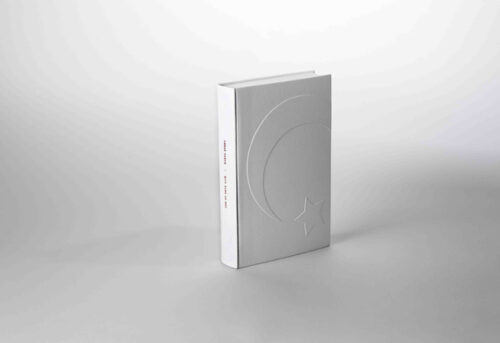
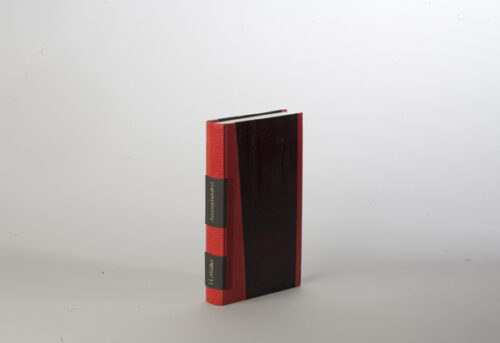
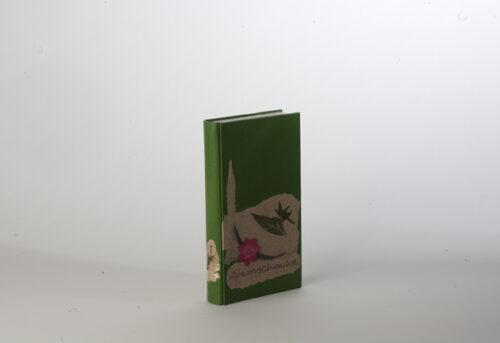
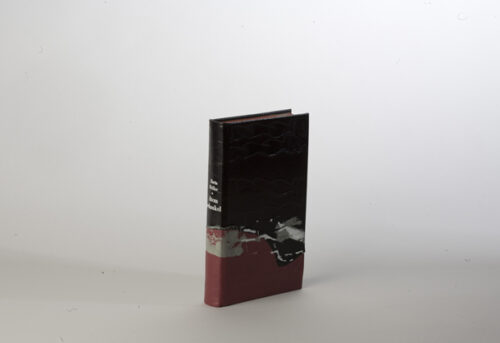
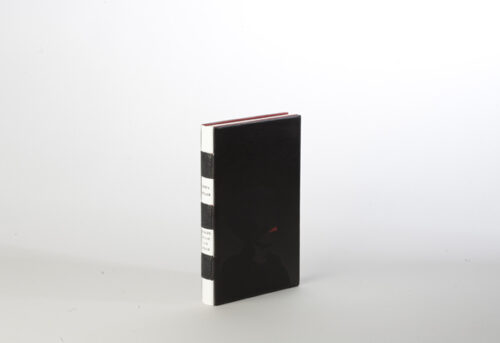
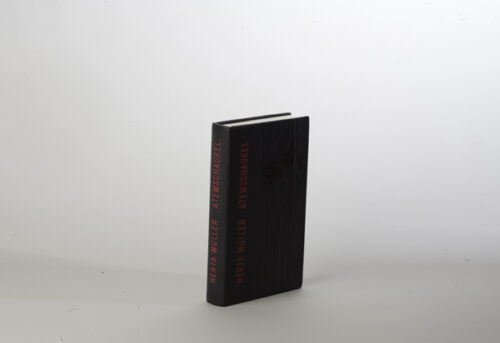
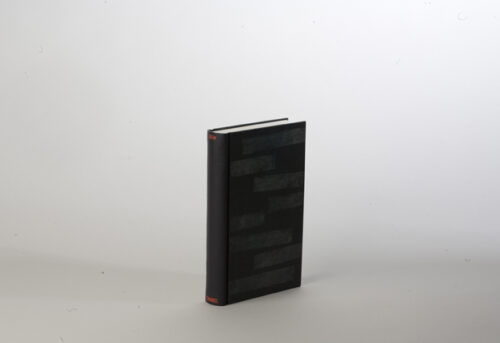
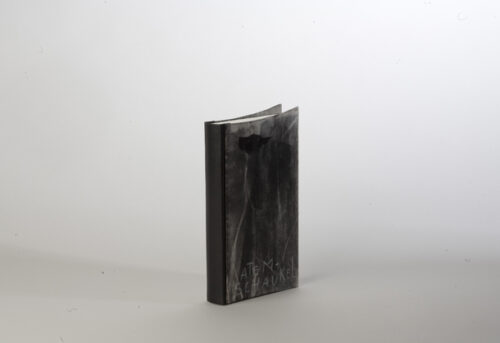
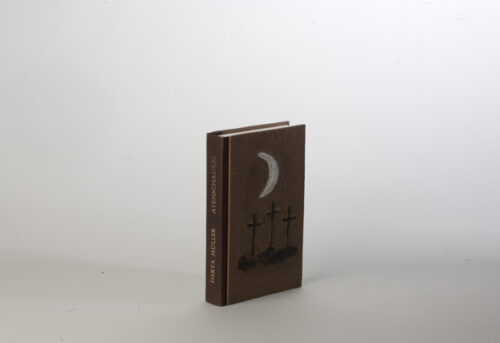
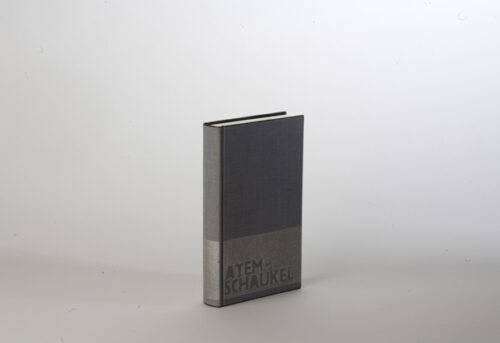
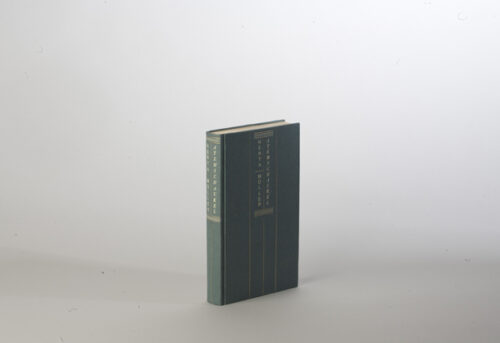
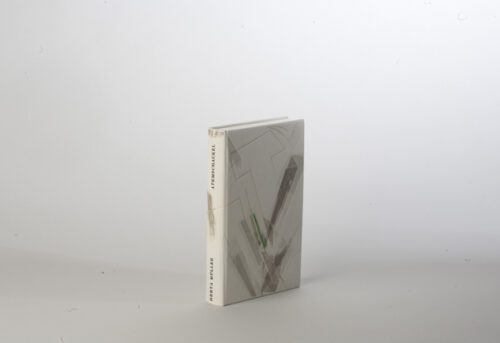
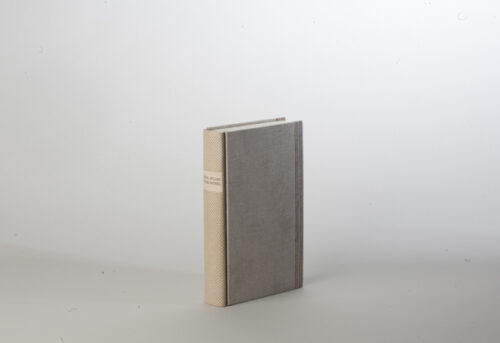
Breath Swing. Hunger Angel. Heart-shovel. Using scissors as her tool, Herta Müller cuts out words and letters from newspapers. From these cuttings she styles new words and images; tales that are cruel and yet beautiful at the same time. Two works by Müller are displayed in this year’s bookbinder’s exhibition at the Nobel Museum: Atemschaukel. (Everything I Possess I Carry with Me) and Der König verneigt sich und tötet (The King Bows and Kills). As I unpack this year’s contributions I am struck by the muted colour scheme: grey, brown and black dominate. But there are also soft, floral textile covers, and someone has chosen to use a geometric design with touches of orange and turquoise.
Each year it is with a mixture of both sorrow and joy that I place the bound volumes behind the glass in the display cases at the Nobel Museum. Sorrow, because the glass prevents visitors from experiencing the tactile sensation that each binding offers: from the most supple leather to painted water-colour drawing paper, silk fabrics and carved woods. At the same time, I experience an equally potent feeling of joy. It is a gift to be able to share the richness of expression, form and cut that each volume imparts. My heartfelt thanks to everyone who has contributed to the exhibition through your highly personal interpretations of the works of the 2009 winner of the Nobel Prize in Literature, Herta Müller.
Karin Jonsson,
Curator, Nobel Museum
Imagine a day in October – the same day every year. A Thursday. It’s nearly one o’clock and the tension is mounting. The literary world holds its breath…
After many guesses and much speculation, the winner of the year’s Nobel Prize in Literature is revealed…finally! A few rejoice! Others mutter. Febrile activity breaks out around the world. It’s time to seize the moment. New editions must be printed as quickly as possible.
The wave of activity spreads to my work- place, too. The race is on to make immediate contact with management at the Laureate’s publishing company. Why the hurry, one might wonder. Because if the bookmakers participating in this exhibition are to have anything to work with, we need to receive unbound copies of the books. These are combinations of sections as it’s called in the industry. Hence the hurry. So far we’ve managed this successfully with only one exception.
We’ve secured a promise from the publishing house that we will receive freshly printed copies just the way we want them. Now work begins on attracting participants for the exhibition. This part has never been a problem. Neither has it been any trouble to attract col- leagues from regions where the language the Laureate represents is spoken. This broadening of the exhibition first began the year J.M.G. Le Clézio was awarded the Literature Prize. Collaboration with colleagues from France added an extra dimension. The exhibition was moved to Paris, for example. When Herta Müller won the prize, we turned our attention to contacting German bookbinders.
You can see the result here. Approximately the same number of Swedish and German bookmakers have supplied their interpretations of two titles by Müller. Atemschaukel (Everything I Possess I Carry With Me) and Der König verneigt sich und tötet (The King Bows and Kills); the first in its original language and the second as translated into Swedish. The editions are expressed differently and display a creative diversity. Through their choice of materials and colour schemes, the bookmakers have left their own distinctive mark on this unique binding.
As in previous years, the work of judging the covers prior to this year’s exhibition has been undertaken by Johanna Röjgård and Bosse Andersson. Our deep thanks for their efforts. Thank you also to Hanser Publishers and Wahlström & Widstrand publishing house for supplying the inserts for the bound editions. A big thanks also to Lotta Löwgren from the Swedish Association of Apprentice Bookbinders and Kaj Flick from the Swedish Bookbinders Guild for their invaluable support in the work undertaken to organize this exhibition.
Per-Anders Hübner,
Bookbinder Exhibition Coordinator, SBI
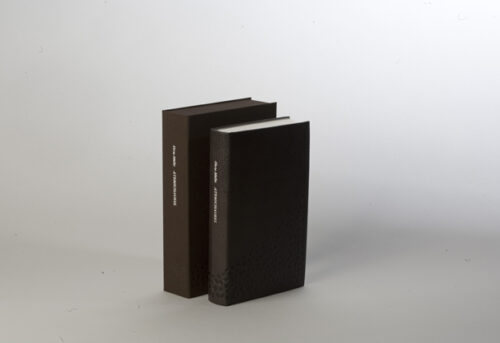
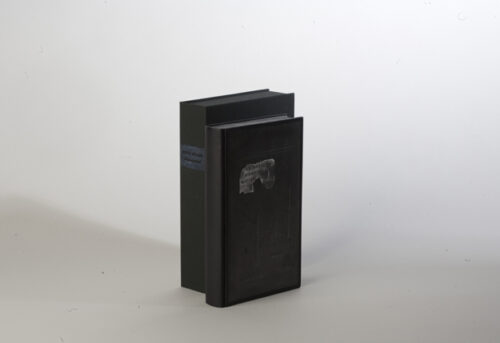
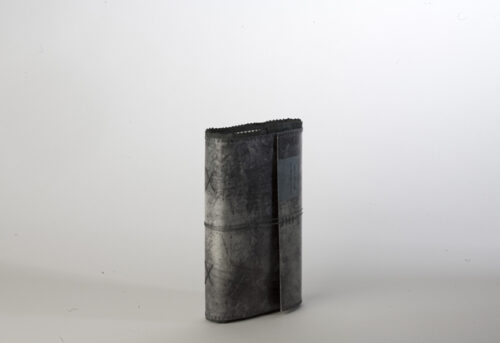
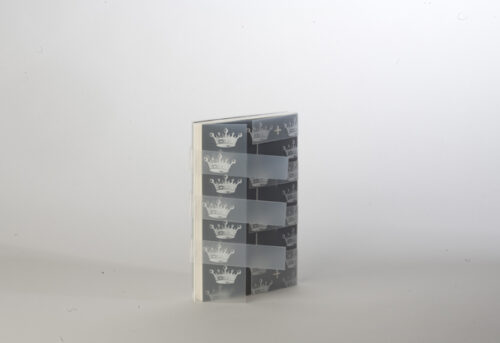
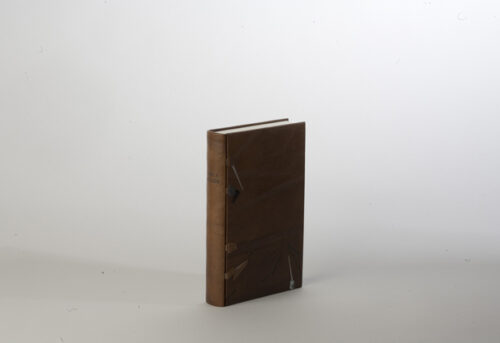
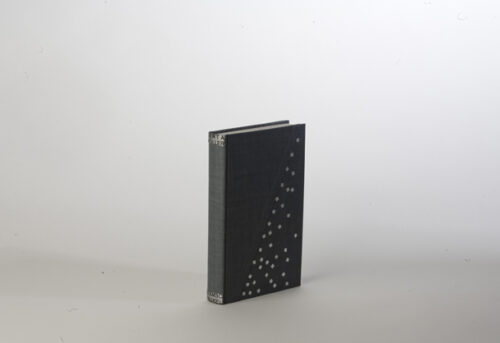
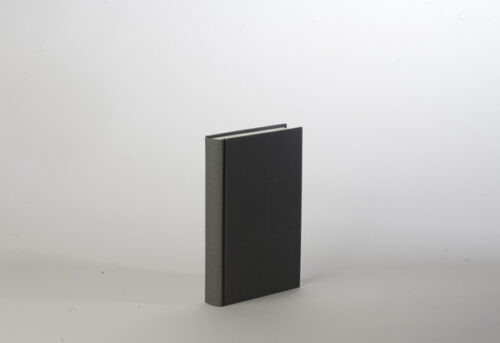
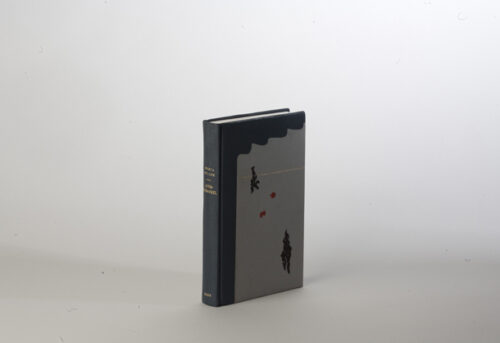
2010 – Mario Vargas Llosa
Recently, The Economist reported that IKEA will soon introduce a new version of its classic Billybookcase. The reason for the change is the company’s realisation that consumers are no longer using its bookcase for its original purpose, storing books. Instead, it is now used to store a range of everyday items, trinkets and the occasional high-end coffee table book. The Economist argues that Billy’s new “storage shelf” label instead of the old “bookcase” is a sign of the times; that the classic printed book is no longer in fashion. From now on, books will be stored digitally in our tablets and e-readers, it claims.
Undoubtedly, the digitalisation of the bookcase will save space in our homes. But are we really prepared to completely forego surrounding ourselves with books in physical form? A quick review of interior design magazines from the last few years seems to indicate the opposite: they frequently use bookshelves and libraries as interior design elements and offer tips on wallpaper with book themes and storage boxes that mimic bindings, so that you can neatly hide knick-knacks on a bookshelf or desktop. More over, Penguin Books will soon re-publish three classic titles with hand-embroidered covers. Despite, or perhaps because of, the digital revolution, bound books continue to appeal to both the hand and the eye.
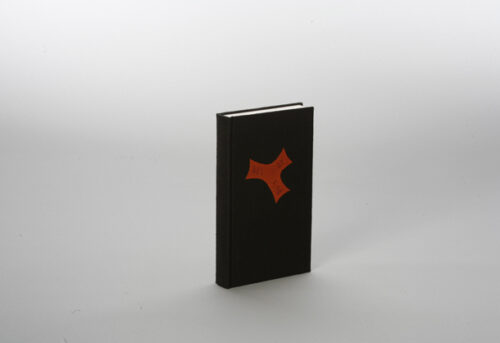
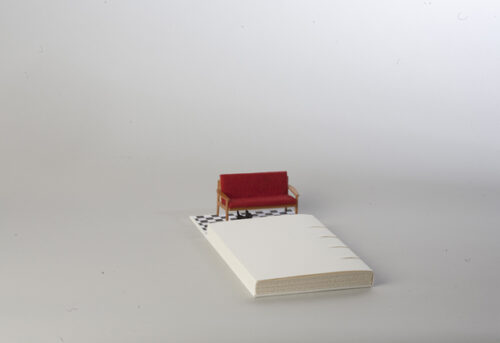
The hand-bound book is the fruitage of an artisanal tradition that dates back centuries, if not millennia. The bookbinding exhibition at the Nobel Museum is a tribute to the craft and to the creativity that each participating bookbinder contributes. This year we would like to thank the bookbinders from Sweden and Spain who have provided us with unique interpretations of two titles by 2010 Nobel Laureate Mario Vargas Llosa – an author whose selection as a Literature Laureate has long been anticipated, longed for and debated.
Karin Jonsson,
Curator, Nobel Museum
We are beginning to chalk up some good statistics these days. This is now the sixth annual exhibition of hand-bound books by Nobel Laureates to be held at the Nobel Museum. It is also the third time that the exhibition includes works by colleagues from the country or linguistic region of the Laureate. For J.M.G. Le Clézio and Herta Müller, we had the opportunity to collaborate with French and German colleagues. This year we have editions of Mario Vargas Llosa’s work from Spain.
The excitement and anticipation that bubbles up when packages from more than forty participants lie as yet unopened on the tables here is hard to describe. The only criterion for the binding was that we bound two copies of the same book – one Swedish and one Spanish edition. What do the different versions look like? What materials have been chosen? How high is the technical standard? Are there any national stylistic features that distinguish the submissions? All these questions and more are buzzing around in our minds as the books are unpacked.
At last, all of the bound books have been removed from their packagings and I am overjoyed to immediately recognise the excellent standard of the bindings. The materials and design are also of a very high standard. I delight in the jumble of different versions of the Spanish title El Sueno del Celta and the Swedish Bockfesten. In English, the book is known as The Dream of the Celt. It’s amusing to try to guess if a book’s craftsman is Spanish or Swedish. It isn’t always easy, but try it for yourself.
One obvious requirement for our work is that we must first obtain copies of the books as unbound. For this, our heartfelt thanks goes to Swedish publisher Norstedts and Spanish publisher Alfaguara for generously providing the- se unbound editions. Similarly, I would like to extend warm thanks to my colleague and friend Ana Ruiz Larea, who helped us with contacts in Spain. Without Ana’s efforts, the exhibition would not have received such a positive response from Spanish bookbinders.
As usual, I’d also like to thank the jury: Johanna Röjgård, Bosse Andersson and representative of the Swedish Association of Apprentice Bookbinders, Lotta Löwgren. I also wish to thank Kaj Flick at the Swedish Bookbinders Guild (SBI) for his help at all levels, both practical and administrative.
Per-Anders Hübner,
Bookbinder Exhibition Coordinator, SBI
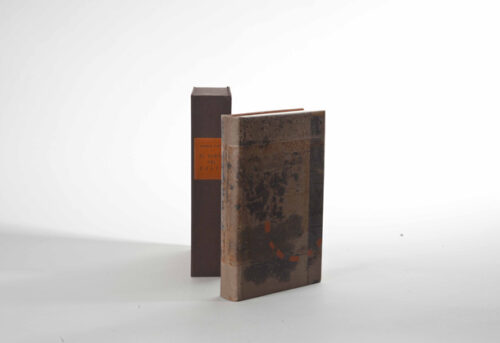
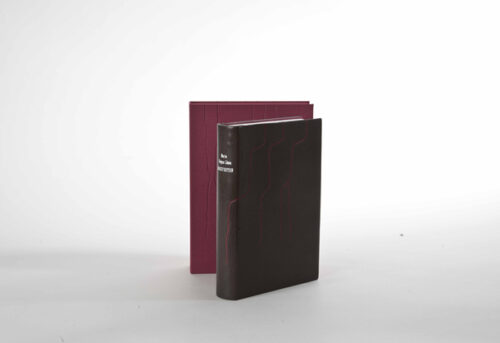
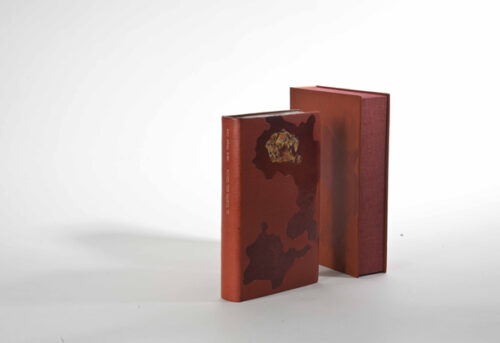
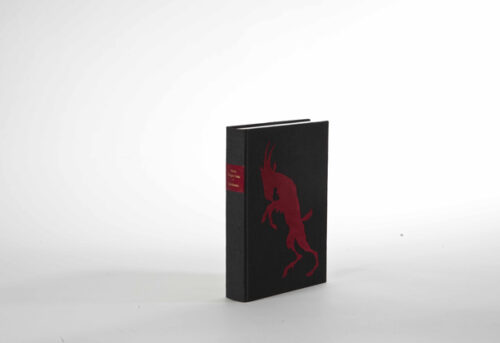
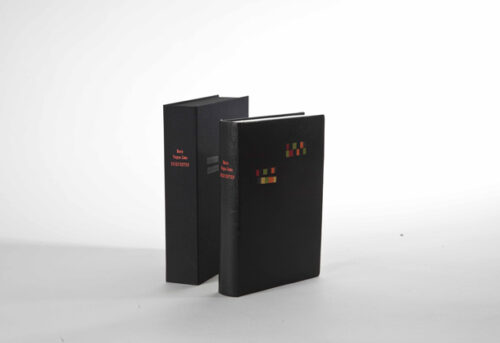
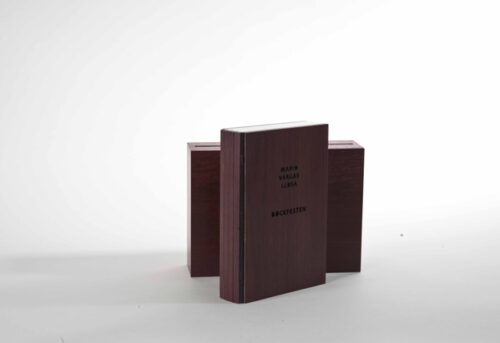
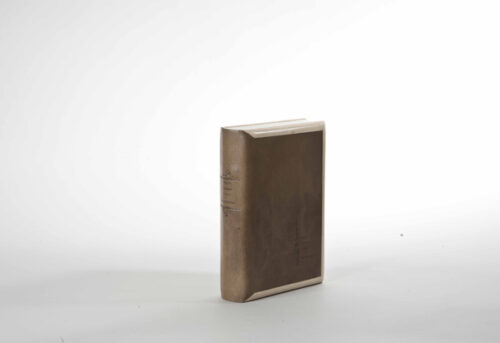
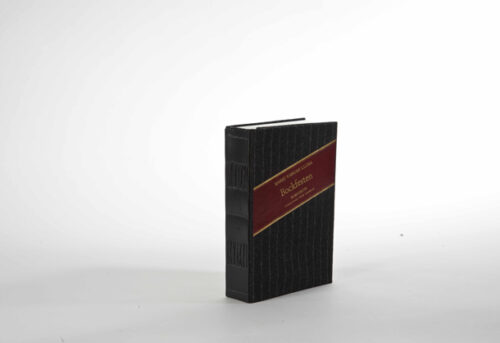
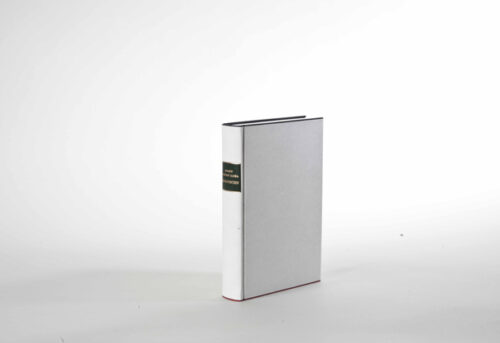
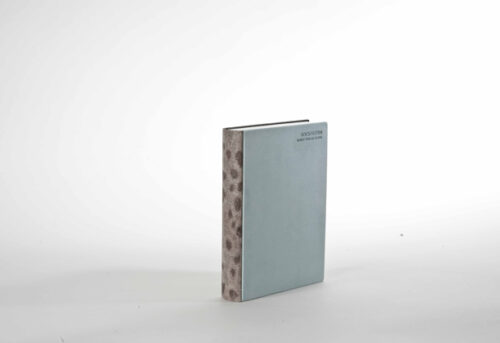
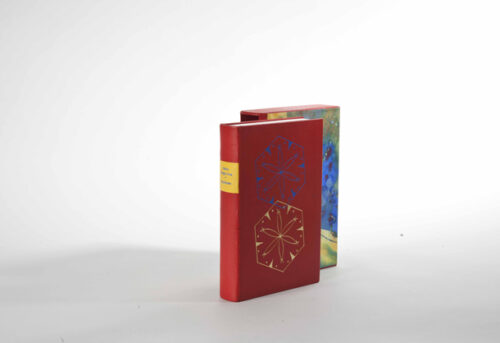
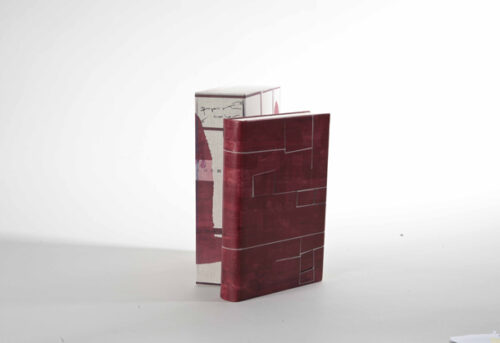
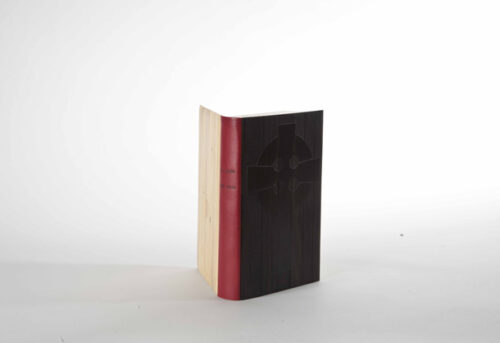
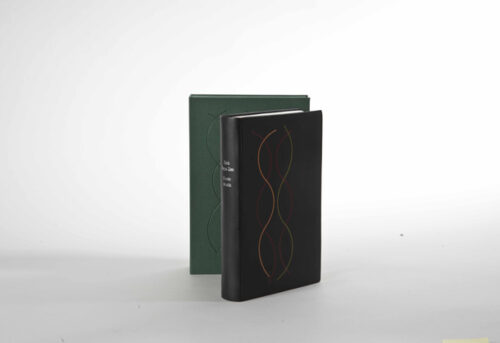
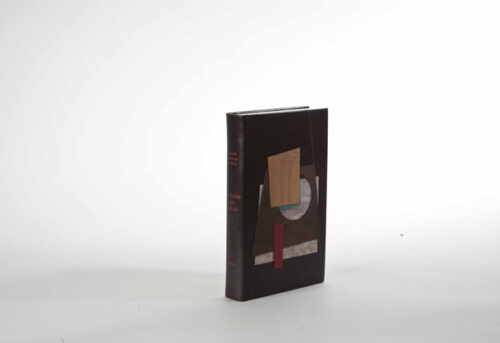
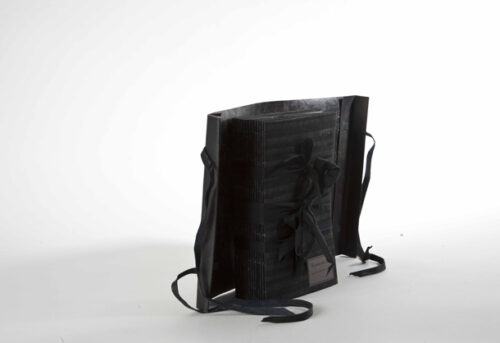
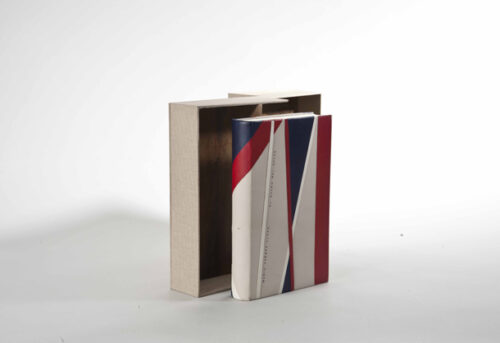
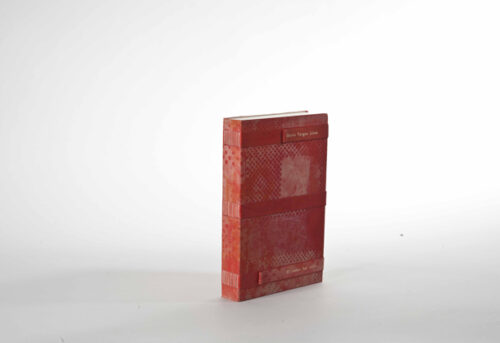
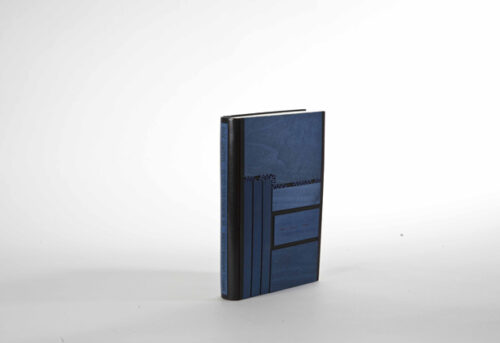
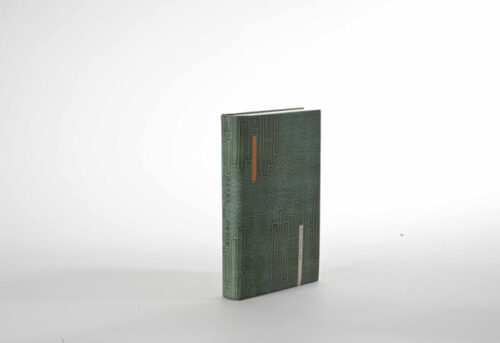
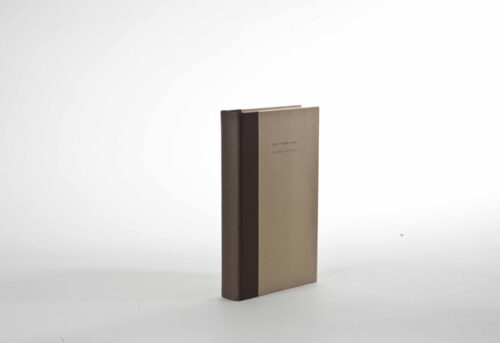
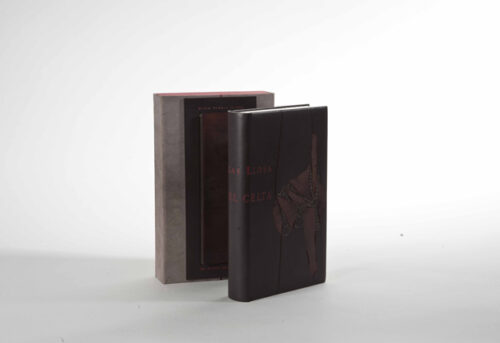
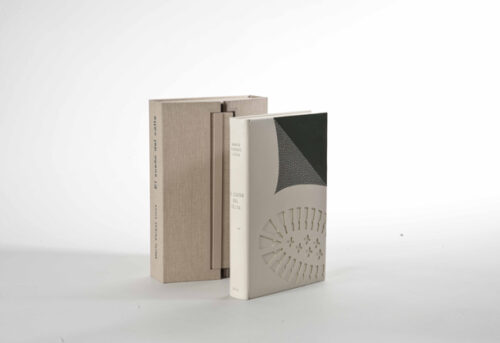
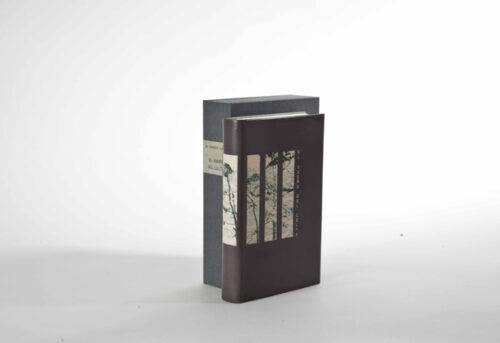
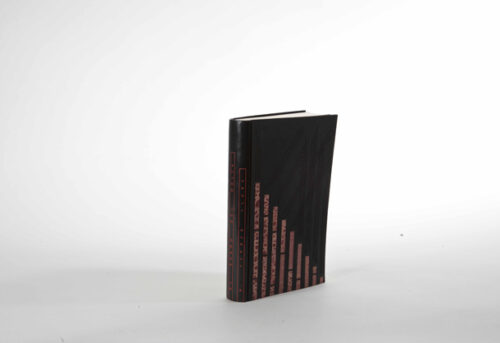
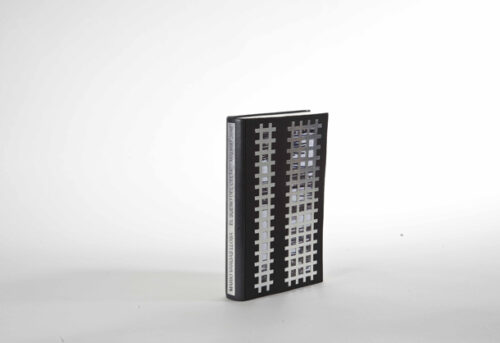
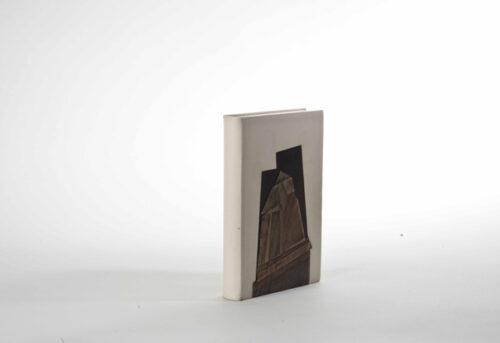
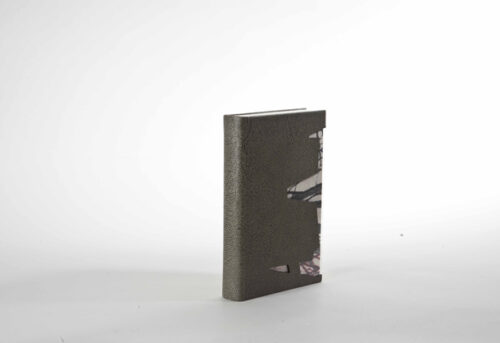
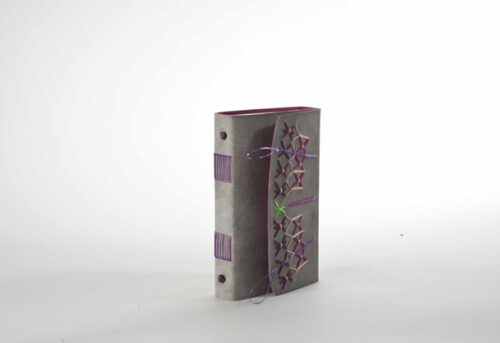
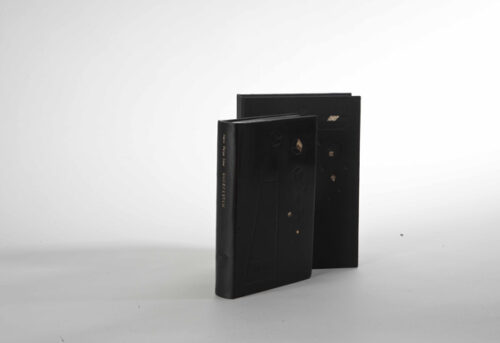
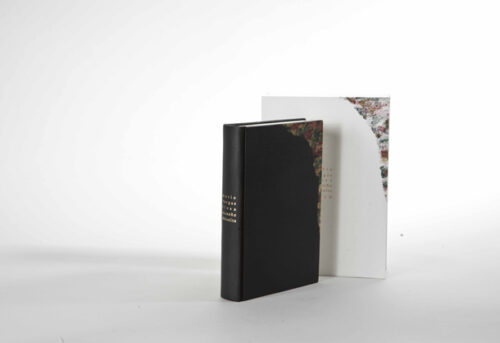
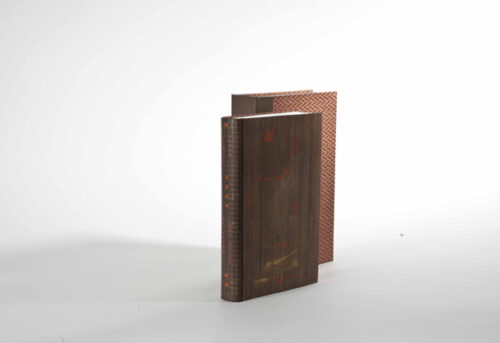
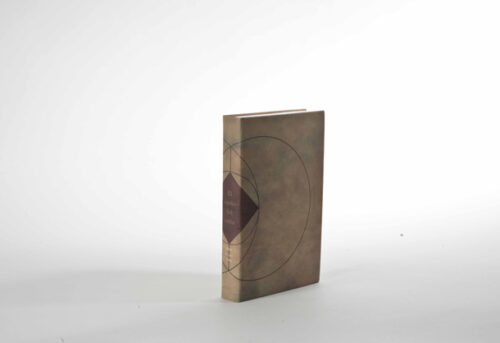
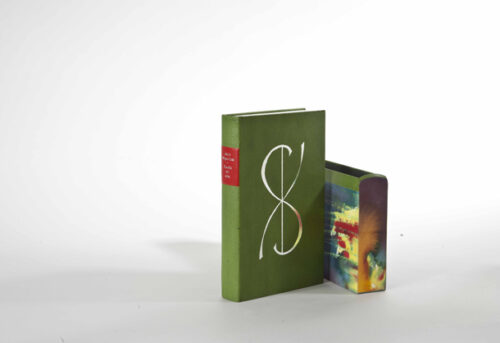
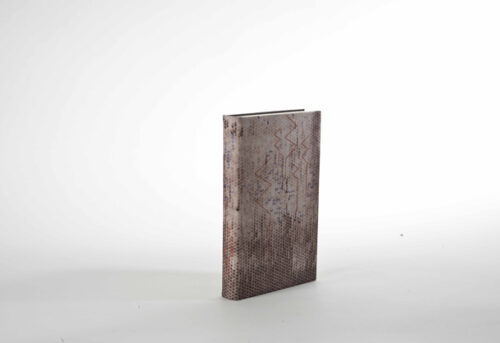
Tomas Gösta Tranströmer
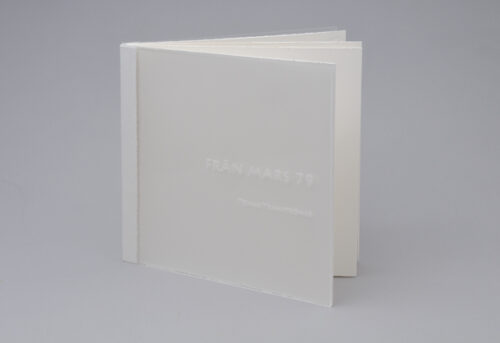
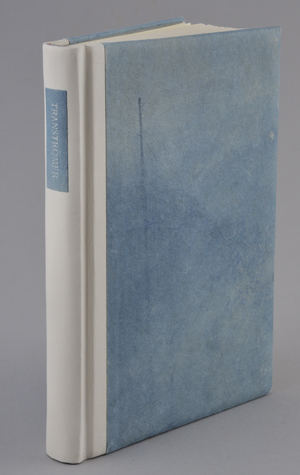
Tomas Gösta Tranströmer, 15 April 1931 – 26 March 2015, was a Swedish poet, psychologist and translator. His poems captured the long Swedish winters, the rhythm of the seasons and the palpable, atmospheric beauty of nature.
Tranströmer’s work is also characterized by a sense of mystery and wonder underlying the routine of everyday life, a quality which often gives his poems a religious dimension. He has been described as a Christian poet.
Tranströmer is acclaimed as one of the most important Scandinavian writers since the Second World War. Critics praised his poetry for its accessibility, even in translation. His poetry has been translated into over 60 languages. He was the recipient of the 1990 Neustadt International Prize for Literature and the 2011 Nobel Prize in Literature.”
2013 – Alice Ann Munro
Alice Ann Munro, born 10 July 1931, is a Canadian short story writer and Nobel Prize winner. Munro’s work has been described as having revolutionized the architecture of short stories, especially in its tendency to move forward and backward in time. Her stories have been said to “”embed more than announce, reveal more than parade.””
Munro’s fiction is most often set in her native Huron County in southwestern Ontario. Her stories explore human complexities in an uncomplicated prose style. Munro’s writing has established her as “”one of our greatest contemporary writers of fiction,”” or, as Cynthia Ozick put it, “”our Chekhov.””
Munro is the recipient of many literary accolades, including the 2013 Nobel Prize in Literature for her work as “”master of the contemporary short story””, and the 2009 Man Booker International Prize for her lifetime body of work. She is also a three-time winner of Canada’s Governor General’s Award for fiction and was the recipient of the Writers’ Trust of Canada’s 1996 Marian Engel Award, as well as the 2004 Rogers Writers’ Trust Fiction Prize for Runaway.”
2012 – Guan Moye
Guan Moye, born 17 February 1955, better known by the pen name Mo Yan, is a Chinese novelist and short story writer. Donald Morrison of U.S. news magazine TIME referred to him as “”one of the most famous, oft-banned and widely pirated of all Chinese writers””, and Jim Leach called him the Chinese answer to Franz Kafka or Joseph Heller.
He is best known to Western readers for his 1987 novel Red Sorghum Clan, of which the Red Sorghum and Sorghum Wine volumes were later adapted for the film Red Sorghum. In 2012, Mo was awarded the Nobel Prize in Literature for his work as a writer “”who with hallucinatory realism merges folk tales, history and the contemporary””.”

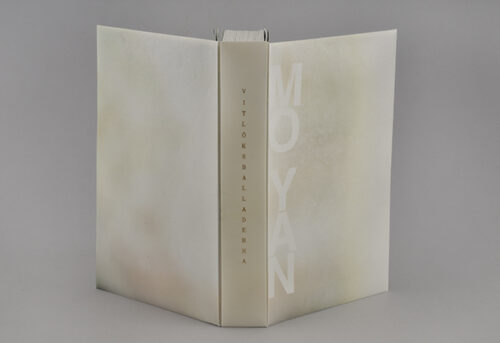
2014 – Jean Patrick Modiano
Jean Patrick Modiano born 30 July 1945, generally known as Patrick Modiano is a French novelist and recipient of the 2014 Nobel Prize in Literature. He previously won the 2012 Austrian State Prize for European Literature, the 2010 Prix mondial Cino Del Duca from the Institut de France for lifetime achievement, the 1978 Prix Goncourt for Rue des boutiques obscures, and the 1972 Grand Prix du roman de l’Académie française for Les Boulevards de ceinture. His works have been translated into more than 30 languages and have been celebrated in and around France, but most of his novels had not been translated into English before he was awarded the Nobel Prize.
Jean Patrick Modiano was born in Boulogne-Billancourt, a commune in the western suburbs of Paris on July 30, 1945. His father, Albert Modiano (1912–77, born in Paris), was of Italian Jewish origin; on his paternal side he was descended from a Sephardic family of Thessaloniki, Greece. His mother, Louisa Colpeyn (1918-2015), was a Belgian (Flemish) actress. Modiano’s parents met in occupied Paris during World War II and began their relationship semi-clandestinely (they separated shortly after Patrick’s birth). His father had refused to wear the Yellow badge and did not turn himself in when Paris Jews were rounded up for deportation to Nazi concentration camps. He was picked up in February 1942, and narrowly missed being deported, after an intervention from a friend. During the war years Albert did business on the black market, hanging around with the Carlingue, the French Gestapo auxiliaries. Its leaders were recruited from the underworld. Albert Modiano never clearly spoke of this period to his son before his death in 1977.”
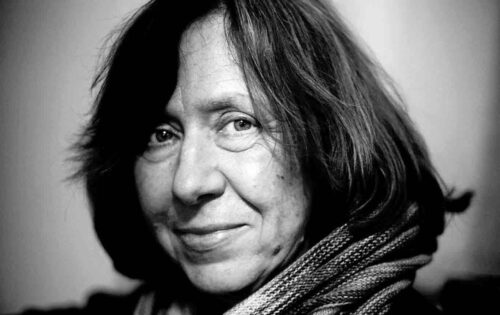
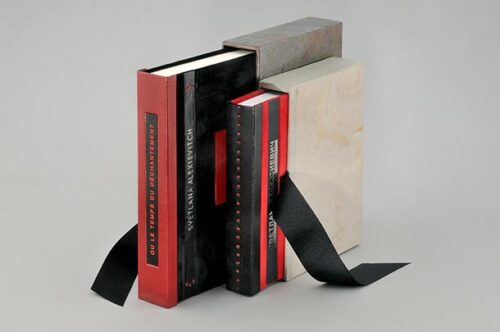
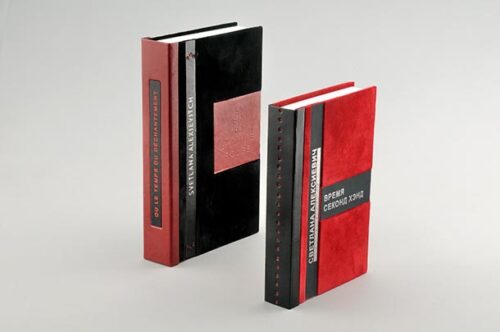
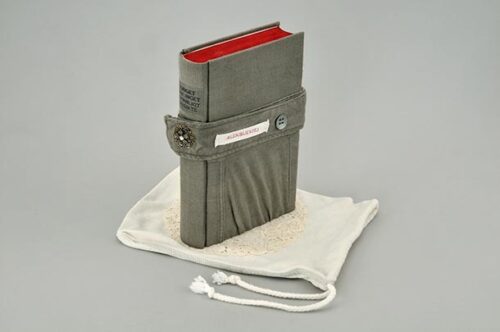
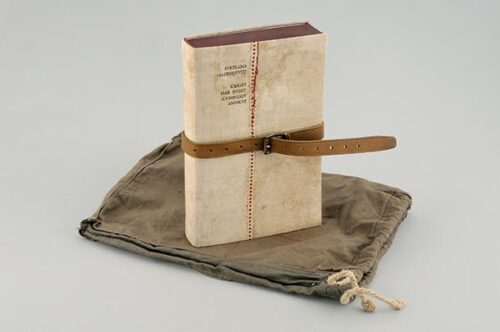
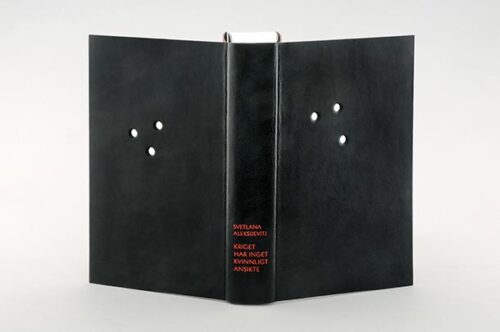
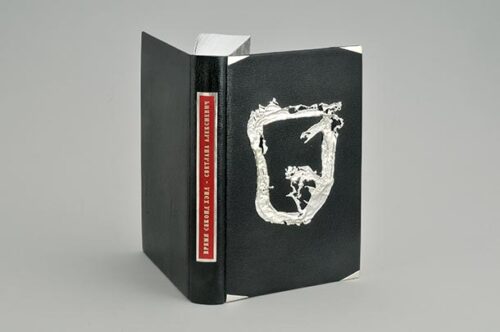
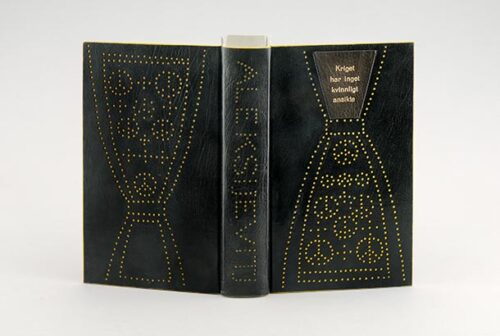
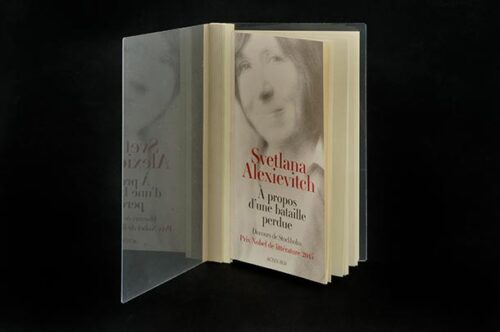
2015 – Svetlana Alexandrovna Alexievich
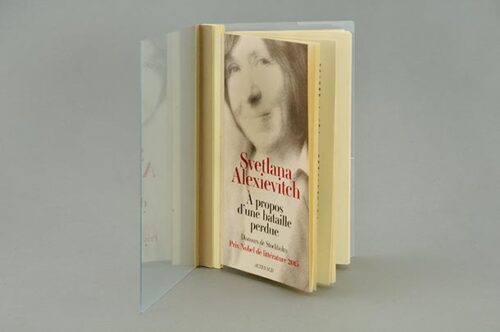
Svetlana Alexandrovna Alexievich (born 31 May 1948 in Stanislaviv, Ukrainian SSR) is a Belarusian investigative journalist and non-fiction prose writer who writes in Russian. She was awarded the 2015 Nobel Prize in Literature “”for her polyphonic writings, a monument to suffering and courage in our time””. She is the first writer from Belarus to receive the award.
Born in the west Ukrainian town of Stanislaviv (since 1962 Ivano-Frankivsk) to a Belarusian father and a Ukrainian mother, Svetlana Alexievich grew up in Belarus. After finishing school she worked as a reporter in several local newspapers before graduating from Belarusian State University (1972) and becoming a correspondent for the literary magazine Neman in Minsk (1976).”
Bob Dylan
Bob Dylan (born Robert Allen Zimmerman, May 24, 1941) is an American singer-songwriter, author, and artist who has been an influential figure in popular music and culture for more than five decades. Much of his most celebrated work dates from the 1960s, when he became a reluctant “”voice of a generation”” with songs such as “Blowi” in the Wind”” and “”The Times They Are a-Changin'”” which became anthems for the Civil Rights Movement and anti-war movement.
In 1965, he controversially “”went electric””, branching out from his earlier work and alienating some fans of the American folk music revival, recording a six-minute single, “”Like a Rolling Stone,”” which enlarged the scope of popular music.”
Sir Kazuo Ishiguro
Sir Kazuo Ishiguro, OBE FRSA FRSL (born 8 November 1954) is a Nobel Prize-winning British novelist, screenwriter, and short-story writer. He was born in Nagasaki, Japan; his family moved to the UK in 1960 when he was five.
Ishiguro graduated from the University of Kent with a bachelor’s degree in English and Philosophy in 1978 and gained his master’s from the University of East Anglia’s creative writing course in 1980.”